


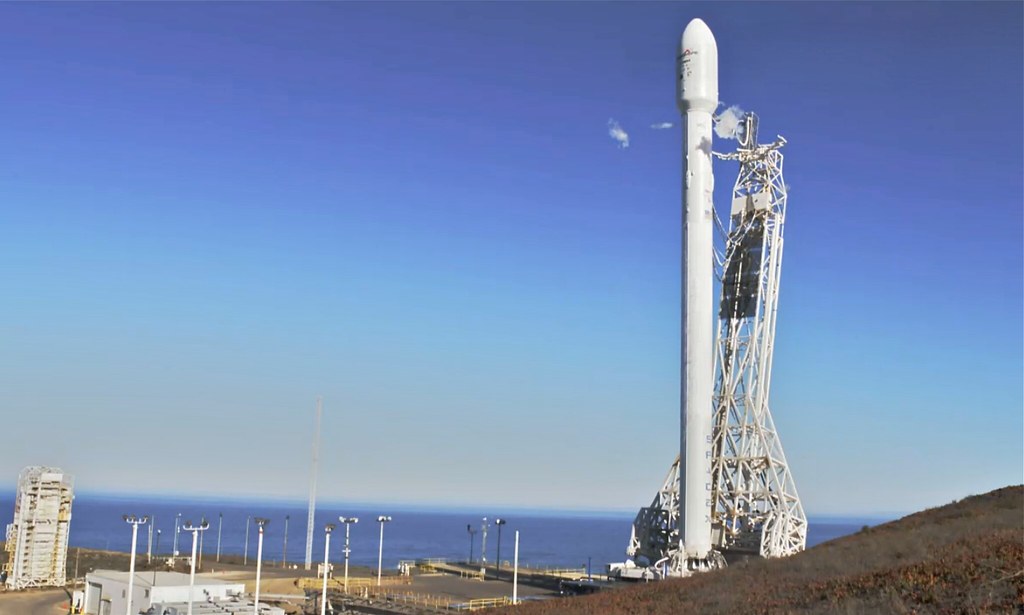
SpaceX Falcon 9 has made headlines again after successfully landing at LZ-40 following its mission to launch NASA’s Crew-13 to the ISS. This achievement highlights the booster’s reliability and efficiency in space travel.
Overview of SpaceX Falcon 9
The SpaceX Falcon 9 has rapidly become a cornerstone of modern space exploration, especially for NASA missions. Known for its reliability and reusability, the Falcon 9 is designed to transport payloads, including crewed spacecraft, to the International Space Station (ISS) and beyond. With its two-stage rocket configuration, the Falcon 9 can deliver significant payloads to low Earth orbit while ensuring cost efficiency and safety.
One of the defining features of the Falcon 9 is its ability to return and land vertically after launch. This innovative reusability significantly reduces the costs associated with space travel, making it an attractive option for various missions. The Falcon 9’s first stage can be recovered and refurbished, allowing SpaceX to conduct multiple flights with the same hardware.
In its recent mission, the Falcon 9 successfully launched NASA’s Crew-13 to the ISS, demonstrating its capability to support crewed missions. The rocket’s performance has impressed space agencies and private companies alike, solidifying its reputation as a reliable workhorse for space transportation.
- Launch Reliability: The Falcon 9 has a high success rate, making it a trusted choice for critical missions.
- Cost Efficiency: The reuse of rocket components helps lower the overall costs for NASA and other clients.
- Technological Innovations: Advanced engineering and design contribute to its impressive performance.
Recent Crew-13 Launch Details
On November 10, 2023, SpaceX successfully launched its Falcon 9 rocket, carrying NASA’s Crew-13 mission to the International Space Station (ISS). This mission marks another significant achievement for the Falcon 9, which has proven to be a reliable booster for NASA operations.
The Crew-13 mission involved a carefully selected team of astronauts who will spend six months on the ISS conducting a variety of scientific experiments and maintenance tasks. The launch took place from Cape Canaveral Space Force Station at 5:00 PM EST, following a brief delay due to weather conditions.
As the Falcon 9 ascended through the atmosphere, its first stage successfully separated and returned to Earth, landing at Landing Zone 40 (LZ-40) just minutes after liftoff. This precision landing highlights the rocket’s reusability, a key feature that has revolutionized space travel.
The Crew-13 team will focus on several important objectives during their stay aboard the ISS, including:
- Scientific Research: Conducting experiments in microgravity that could benefit life on Earth.
- Technology Demonstration: Testing new technologies that will support future missions to the Moon and Mars.
- International Collaboration: Working with astronauts from other countries to promote global cooperation in space exploration.
Overall, the Falcon 9 continues to be a vital asset for NASA’s human spaceflight program, demonstrating its capability and reliability with each mission.
Impact of Falcon 9 on NASA Missions
The impact of the SpaceX Falcon 9 on NASA missions has been significant, marking a transformative era in space exploration. Since its debut, the Falcon 9 has consistently demonstrated its reliability and cost-effectiveness, making it an attractive choice for NASA’s various missions.
One of the crucial aspects of the Falcon 9 is its reusability, which has led to a substantial reduction in launch costs. This feature allows NASA to allocate more resources towards research and development rather than spending on multiple rockets. The ability to refurbish and reuse the first stage of the Falcon 9 has not only streamlined operations but also set a new standard in the aerospace industry.
Moreover, the Falcon 9’s successful missions, including the recent launch of Crew-13 to the International Space Station (ISS), have fostered a renewed partnership between SpaceX and NASA. This collaboration has enabled NASA to focus on deeper space missions while relying on SpaceX for transportation to low Earth orbit.
As NASA continues to push the boundaries of space exploration, the Falcon 9 will likely play a pivotal role in upcoming projects, including missions to the Moon and Mars. The ongoing success of the Falcon 9 further solidifies its status as one of the best boosters for NASA, paving the way for a promising future in aerospace endeavors.
Future of SpaceX Rocket Technology
The future of SpaceX rocket technology is poised for significant advancements, particularly with the Falcon 9 continuing to play a pivotal role in NASA missions. As the company pushes the boundaries of space exploration, the Falcon 9 booster is expected to undergo further refinements that could enhance its reliability and efficiency.
One of the key areas of focus is the reusability of the Falcon 9, which has already set a standard in the aerospace industry. The ability to recover and reuse rocket components not only reduces costs but also minimizes waste, aligning with broader sustainability goals in space travel. SpaceX aims to improve the turnaround time between launches, which could allow for more frequent missions to the International Space Station (ISS) and beyond.
Additionally, innovations in propulsion technology are on the horizon. The implementation of advanced materials and designs may lead to improved performance and payload capacity for future missions. As NASA continues to rely on the Falcon 9 for various projects, including crewed missions and satellite deployments, the development of next-generation rockets could further solidify SpaceX’s position as a leader in the industry.
With the ongoing collaboration between SpaceX and NASA, the future looks promising. The Falcon 9 is not just a booster; it is a symbol of the new era in space exploration, where technological advancements drive humanity’s quest for knowledge beyond our planet.
Many experts believe that the SpaceX Falcon 9 has proven its reliability through numerous successful launches. As NASA continues to explore partnerships with private companies, the SpaceX Falcon 9 remains a top contender for future missions.
By jurvetson via Openverse
Sources
You might also like
- PMPS 2026 Season 2: Best Schedule and Complete Format Guide
- Capturing Bigfoot trailer: Is it the Best Gaming Release Yet?
- SpaceX Payload Launch: Proven Success with Google AI Chips