


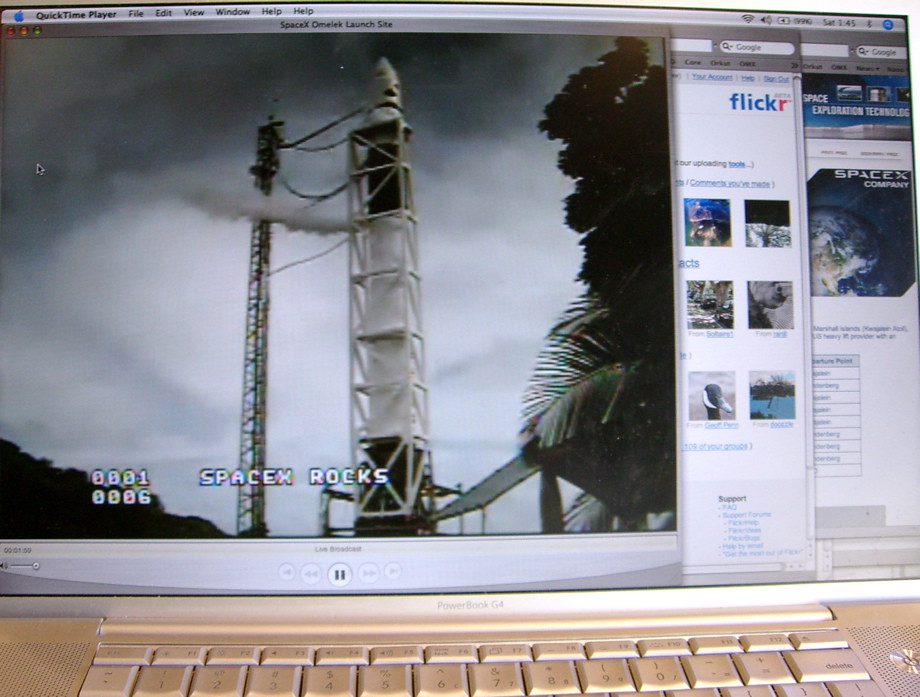
The SpaceX payload launch successfully delivered 130 payloads, including Google AI chips, marking a significant milestone in space exploration.
Overview of the SpaceX Payload Launch
SpaceX has achieved another milestone with its recent payload launch, successfully deploying 130 payloads into orbit, which includes cutting-edge Google AI chips. This event showcases the growing capabilities and reliability of SpaceX in the space industry.
The launch, which took place earlier this week, was part of SpaceX’s ongoing mission to deliver various payloads for clients around the world. Among the notable payloads were the advanced AI chips from Google, designed to enhance machine learning applications and improve data processing capabilities.
As SpaceX continues to innovate, their payload launch services have become increasingly sought after. Key highlights from the mission include:
- Successful deployment of multiple satellites in a single launch.
- Integration of advanced technology to ensure optimal performance.
- Partnerships with leading tech companies like Google.
With each successful mission, SpaceX solidifies its position as a leader in the aerospace sector, paving the way for future advancements in satellite technology and commercial space travel.
Significance of Google AI Chips in Space
The recent SpaceX payload launch has not only marked a significant achievement in space exploration but also highlighted the importance of advanced technology in satellite operations. Among the 130 payloads launched, the inclusion of Google AI chips stands out as a groundbreaking development.
These AI chips are designed to enhance data processing capabilities for a variety of applications, particularly in space. Their significance can be outlined as follows:
- Improved Data Analysis: Google AI chips can process vast amounts of data quickly, enabling real-time analysis of information gathered from space missions.
- Enhanced Autonomy: With advanced AI algorithms, satellites equipped with these chips can operate more autonomously, reducing the need for constant human intervention.
- Increased Efficiency: The chips allow for more efficient energy use, extending the operational lifespan of satellites.
- Innovative Research Opportunities: Researchers can leverage AI capabilities to explore new frontiers in astrophysics and planetary science.
Overall, the integration of Google AI chips in this SpaceX payload launch signifies a step toward a smarter, more efficient future in space technology.
Key Highlights from the SpaceX Mission
SpaceX’s recent payload launch has garnered significant attention for its innovative approach and impressive outcomes. Here are the key highlights from the mission:
- Diverse Payload: The launch included 130 payloads, showcasing SpaceX’s capability to handle a variety of missions simultaneously.
- Google AI Chips: Among the notable payloads were advanced AI chips developed by Google, aimed at enhancing computational power in space.
- Successful Deployment: All payloads were successfully deployed into their intended orbits, marking another triumph for SpaceX in its ongoing mission to revolutionize space logistics.
- Environmental Considerations: The mission emphasized sustainability, with efforts to reduce the environmental impact of satellite launches.
- Future Collaborations: The partnership between SpaceX and Google is anticipated to lead to more innovative projects in the realm of artificial intelligence and space exploration.
This successful SpaceX payload launch not only demonstrates the company’s engineering prowess but also highlights the potential of AI technologies in advancing space missions.
Future Implications for Space Technology
The recent SpaceX payload launch, which successfully deployed 130 payloads including advanced Google AI chips, heralds a new era in space technology. This mission not only demonstrates the capabilities of reusable rocket technology but also emphasizes the growing importance of artificial intelligence in space exploration.
As space missions become increasingly complex, the integration of AI will be crucial for managing vast amounts of data and making real-time decisions. The implications of this technology extend beyond Earth orbit, as AI-enhanced systems can improve the efficiency of satellite operations and data processing.
Furthermore, the successful deployment of these AI chips may open new avenues for collaboration between tech companies and space agencies. Key areas of potential development include:
- Autonomous Navigation: AI can facilitate self-guided spacecraft, reducing the need for human intervention.
- Enhanced Data Analysis: AI can quickly analyze and interpret data collected from space missions.
- Predictive Maintenance: AI systems can monitor spacecraft health and predict maintenance needs before issues arise.
Overall, the SpaceX payload launch marks a significant step forward in integrating cutting-edge technology into the future of space exploration.
The recent SpaceX payload launch demonstrated not only the reliability of the Falcon 9 rocket but also the impressive capabilities of Google AI chips integrated into the payload. As a result, the SpaceX payload launch has set new benchmarks for future missions in the aerospace industry.
By jurvetson via Openverse
References
You might also like
- Google Gemini AI model: The Best New Frontier Release
- NVIDIA driver bugs: Worst Proven Issues Revealed
- Samsung Galaxy S27 Ultra camera: Is it the best upgrade?