




Looking for some captivating and brain-teasing riddles in the Filipino language? Look no further! In this article, we’ll dive into the world of “bugtong halimbawa” – a unique form of riddles that will challenge your mind and keep you entertained. These riddles, deeply rooted in Filipino culture, not only provide a fun way to pass the time but also offer insights into traditional wisdom and clever wordplay. So, if you’re ready to exercise your brain and uncover some fascinating “bugtong halimbawa,” let’s get started!

Bugtong Halimbawa: Unveiling the Enigma and Creativity of Filipino Riddles
Bugtong Halimbawa, also known as Filipino riddles, have been an integral part of Philippine culture for centuries. These intriguing and thought-provoking riddles challenge our minds and bring us closer to the rich heritage and wit of the Filipino people. In this article, we will delve deep into the world of bugtong halimbawa, exploring their origins, structure, and significance in Filipino society.
The Origins of Bugtong Halimbawa
Bugtong halimbawa have a long and colorful history in the Philippines. They were passed down from one generation to another through oral tradition, serving as a form of entertainment, education, and mental exercise. These riddles were often recited during social gatherings, family reunions, and school settings to engage and enlighten both young and old.
The exact origins of bugtong halimbawa are difficult to trace, as they have evolved and adapted over time. However, it is believed that they were influenced by the diverse cultural backgrounds of the Filipino people, including indigenous beliefs, Spanish colonization, and regional folklore. This amalgamation of cultural influences enriched the complexity and diversity of bugtong halimbawa.
The Structure of Bugtong Halimbawa
Bugtong halimbawa are characterized by their succinct and poetic structure. They are typically composed of two parts: the question or riddle proper (palaisipan) and the answer (sagot). The palaisipan presents a metaphorical description of the object or concept being referred to, while the sagot reveals the literal answer.
These riddles often utilize vivid imagery, figurative language, and clever wordplay to challenge the listener’s analytical and deductive skills. The answers can range from common objects in everyday life to abstract ideas or natural phenomena. Some bugtong halimbawa may require a deep understanding of Filipino culture, history, or geography to unravel the hidden meaning.
Examples of Bugtong Halimbawa
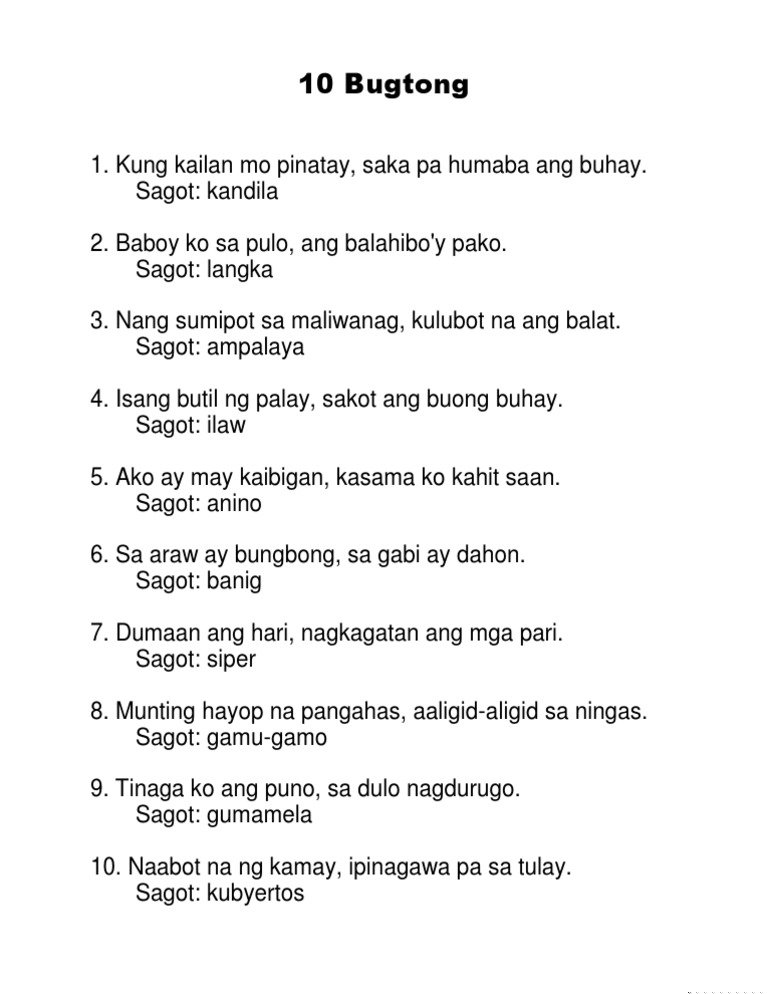
To give you a taste of the fascinating world of bugtong halimbawa, here are a few examples:
- “Bulalakaw sa umaga, huli sa gab-i” (Star)
- “Bahay ni Ka Tumba, puno ng ligaya” (Library)
- “Dalawa ang bunga, puti ang tadyang” (Coconut)
These riddles demonstrate the poetic nature of bugtong halimbawa and showcase the creativity of the Filipino people in crafting riddles that capture the essence of various objects and concepts.
The Significance of Bugtong Halimbawa in Filipino Society
Bugtong halimbawa play a significant role in Filipino society and culture. They are more than just brain teasers; they serve as a repository of wisdom, values, and cultural identity. Here are some ways in which bugtong halimbawa are valued and appreciated in Filipino society:
Promoting Critical Thinking and Problem-Solving Skills
Engaging in bugtong halimbawa exercises the mind and promotes critical thinking and problem-solving skills. These riddles require careful analysis, lateral thinking, and logical reasoning to arrive at the correct answer. By regularly practicing bugtong halimbawa, individuals develop their cognitive abilities and sharpen their minds.
Preserving Cultural Heritage
Bugtong halimbawa serve as a bridge between generations, preserving the cultural heritage of the Filipino people. They carry with them the traditions, beliefs, and values passed down from ancestors. By keeping bugtong halimbawa alive, Filipinos ensure that their cultural identity and roots are not forgotten.
Entertainment and Social Bonding
Reciting and solving bugtong halimbawa has always been a source of entertainment and social bonding in Filipino communities. Families and friends gather around to challenge each other’s wit and enjoy the shared experience. This strengthens social connections and fosters a sense of belonging.
Language and Linguistic Development
Bugtong halimbawa promote language and linguistic development among Filipinos. These riddles encourage the mastery of Filipino vocabulary, grammar, and figurative language. By engaging with bugtong halimbawa, individuals enhance their language skills and appreciation for the intricacies of the Filipino language.
Celebrating Filipino Wit and Creativity
Bugtong halimbawa reflect the wit, creativity, and ingenuity of the Filipino people. They showcase the ability to convey complex ideas in a concise and artistic manner. By celebrating bugtong halimbawa, Filipinos honor their cultural achievements and demonstrate their unique approach to problem-solving and communication.
Bugtong halimbawa are not just mere riddles; they are windows into the Filipino culture, heritage, and way of thinking. These poetic puzzles challenge our minds, foster critical thinking, and foster a sense of community. By unraveling the enigma of bugtong halimbawa, we gain a deeper understanding and appreciation for the rich tapestry of the Filipino identity.
50 Bugtong (Filipino Riddles) | (May Orasan at mga Sagot)
Frequently Asked Questions
What are some examples of ‘bugtong’ (riddles) in Filipino culture?
Here are a few examples of ‘bugtong’ in Filipino culture:
Where can I find more ‘bugtong’ examples?
You can find more examples of ‘bugtong’ in Filipino culture in various sources such as books on Filipino folklore, online websites dedicated to Filipino riddles, or by asking Filipino friends or family members who are familiar with this tradition.
What is the purpose of ‘bugtong’?
The purpose of ‘bugtong’ is to challenge one’s thinking and problem-solving skills by presenting a riddle or puzzle that requires creative and critical thinking to solve. It is also a way to preserve the cultural heritage and oral traditions of the Filipino people.
How do you solve a ‘bugtong’?
Solving a ‘bugtong’ requires careful analysis of the clues and using logical reasoning to arrive at the correct answer. It often involves thinking metaphorically or figuratively rather than taking things literally. It can be helpful to read or listen to the ‘bugtong’ multiple times and break it down into smaller parts to better understand the hidden meaning.
What are the benefits of solving ‘bugtong’?
Solving ‘bugtong’ offers several benefits, including improving critical thinking skills, enhancing problem-solving abilities, stimulating creativity, and increasing knowledge and understanding of Filipino culture. It also provides a fun and engaging way to pass the time and challenge oneself mentally.
Are ‘bugtong’ only limited to Filipino culture?
While ‘bugtong’ originated from Filipino culture, riddles and puzzles are found in various cultures around the world. Different countries and regions have their own unique riddles that offer insights into their respective cultures and traditions. Exploring riddles from different cultures can be a fascinating way to learn about diverse perspectives and ways of thinking.
Final Thoughts
Bugtong halimbawa is a fascinating form of Filipino riddles that has captivated the minds of people across generations. These riddles, with their clever wordplay and hidden meanings, offer a fun and interactive way to challenge one’s intellect. From describing everyday objects to uncovering nature’s wonders, bugtong halimbawa serves as a testament to the rich cultural heritage of the Philippines. Whether it’s pondering over the answer or unraveling the clever clues, bugtong halimbawa proves to be an engaging and entertaining activity for all. So, next time you’re in search of a brain-teaser that showcases the beauty of the Filipino language, look no further than bugtong halimbawa.